Half Space Patterns That Created Central Shots
Teams from the Premier League and Ligue 1 implemented various patterns which resulted in dangerous shot locations

Last week, Thom Harris of The Athletic wrote a piece about Dominic Calvert-Lewin and the centrality of the striker’s shot locations.
The article included a visual of other players in Europe’s top leagues who also have very central shot locations.
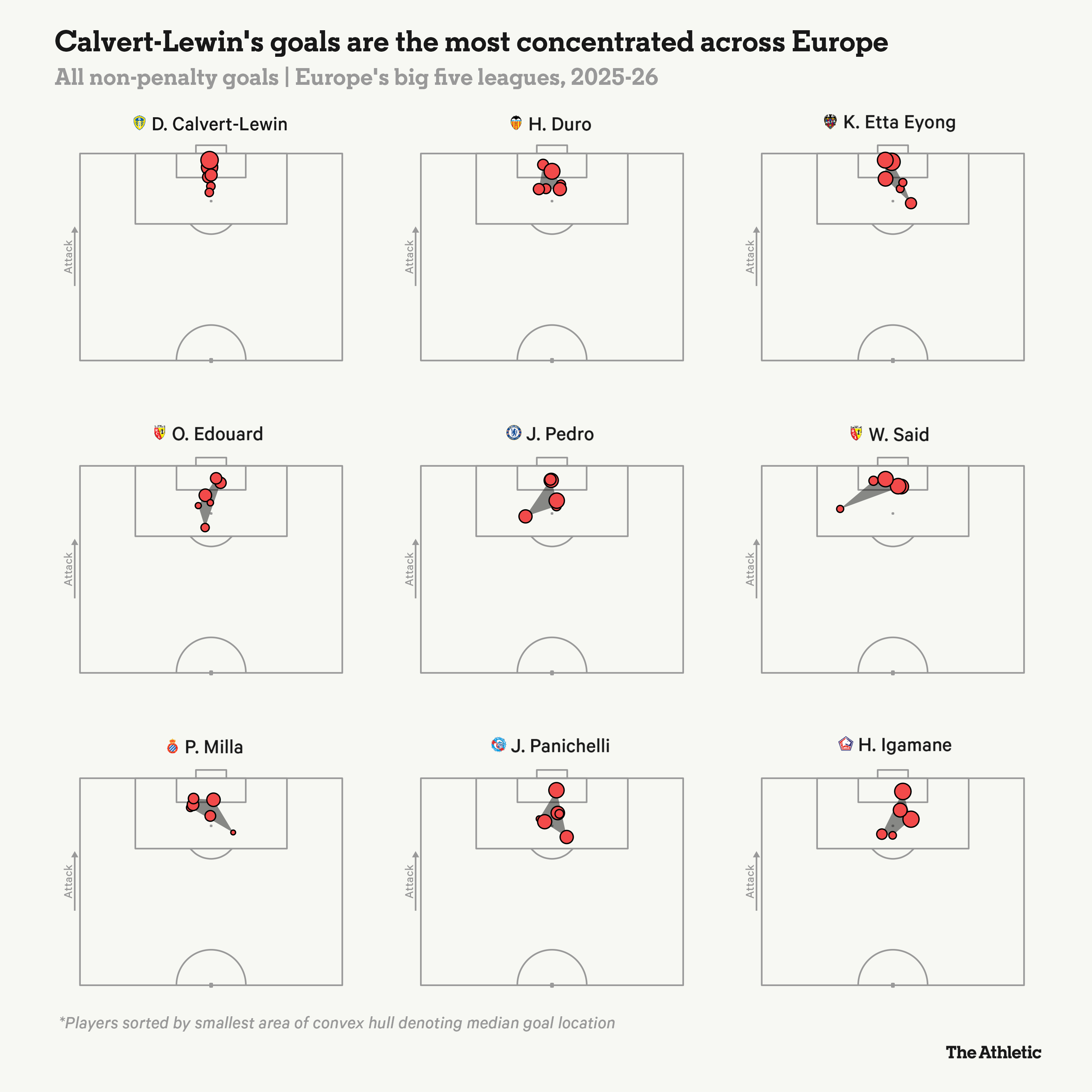
The centrality of these players’ shot locations intrigued me, and it sparked a curiosity: What patterns of play did the teams implement in order for these players to get shots off in such central locations?
I took a look at all of the players’ shots in open play from this club season so far. Crosses from the wide channel into a player positioned centrally seems to be an obvious mechanism to create these chances.
I wanted to look for other patterns of play that may not be so obvious. What I found was that some of the teams were utilizing the half space in various ways to open space or play into central areas.
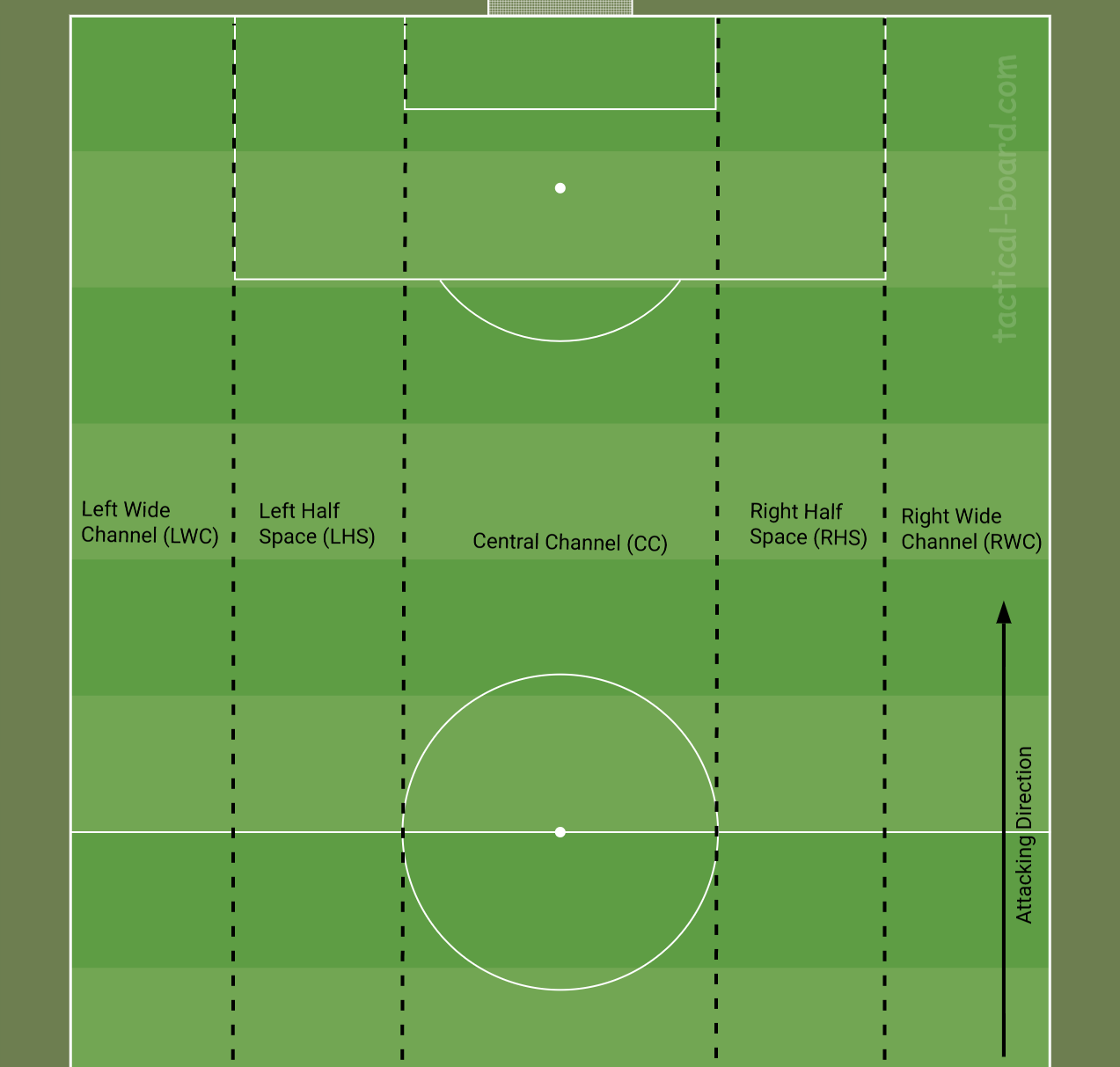
Before I discuss these different patterns, I want to define the half space. The field is often split into five vertical channels.
The central and wide channels are well defined. The half spaces are the areas between the central channel and the wide channels and have more ambiguity.
João Pedro & Chelsea — Combining and driving in the half space to create space centrally
In the final third, Chelsea combine in the half space which attracts opposition defenders. Pedro takes advantage of this, positions himself in central areas in the space that is created.
In the first example against Brentford, Pedro (highlighted in yellow) was the highest positioned Chelsea player and was in space to combine into the left half space.
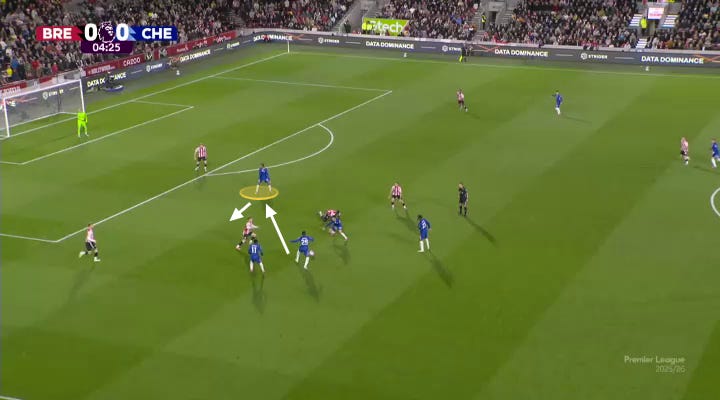
His teammate got on the ball and drove forward in the half space towards the box. While Brentford’s attention was on his teammate, Pedro moved away centrally into the box where he received the ball and took a shot.
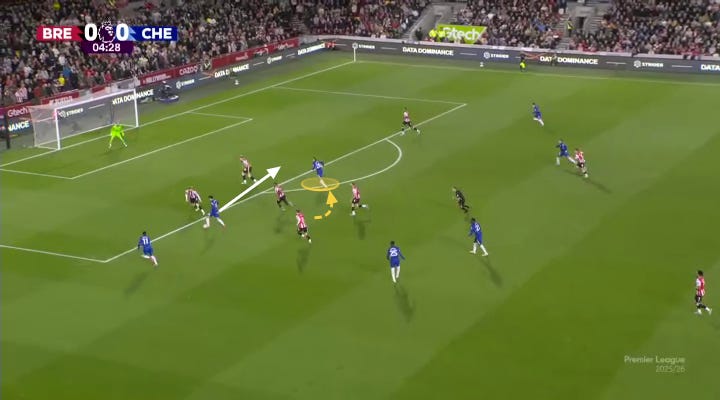
Against Wolves, Chelsea had the ball in the left wide channel. A midfielder made a forward run in the half space and the player on the ball drove inside into the half space. Pedro is highlighted in black.
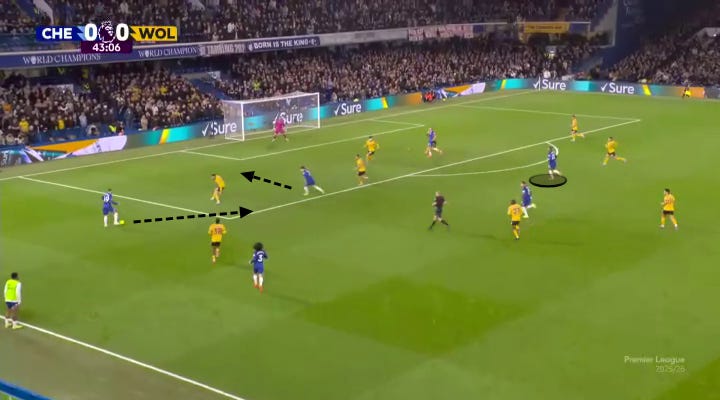
As Wolves tried to mark the run off of the ball and defend the player on the ball, space opened up centrally.
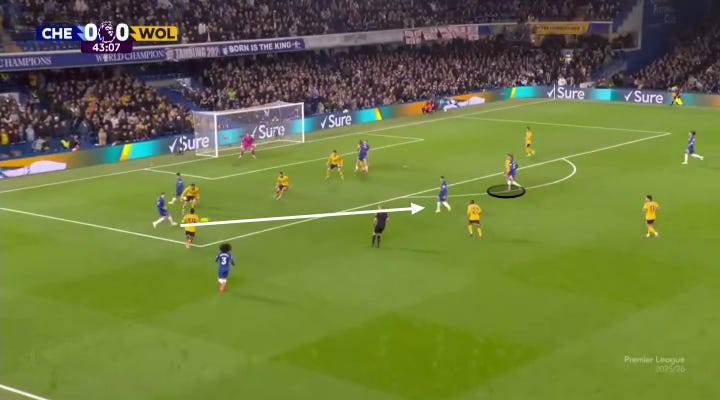
Pedro didn’t take the initial shot, but was able to pick up a rebound in the box and get a shot off.
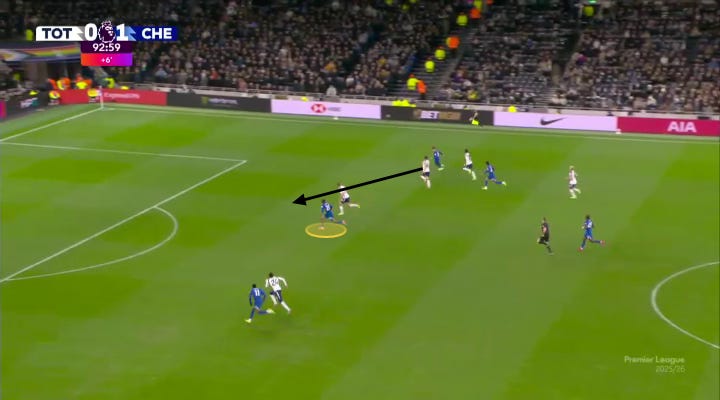
In the last example, Chelsea had the ball in the half space where two players combine. Pedro was positioned centrally highlighted in yellow.
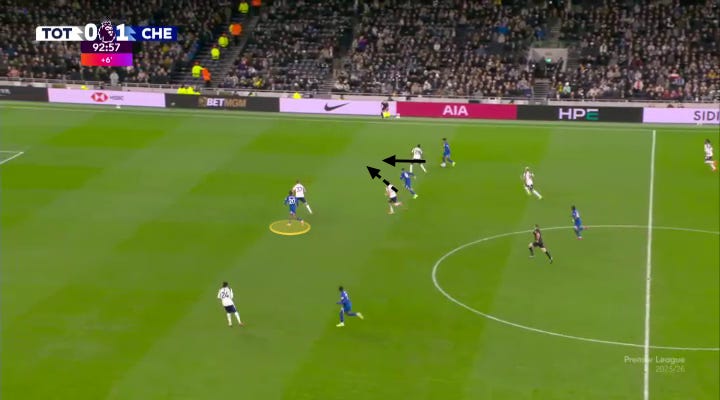
As the play developed, Pedro pulled away slightly from the Spurs defender and was able to receive the ball in the box and take a shot.
Dominic Calvert-Lewin & Leeds United — Deep long balls from the half space
Leeds have created many opportunities centrally in the box from long throw ins, and Calvert-Lewin has been good at scoring in those moments.
In open play, there have been multiple occasions where they shift the ball into the half space from wide areas and look to put service into the box from deeper.
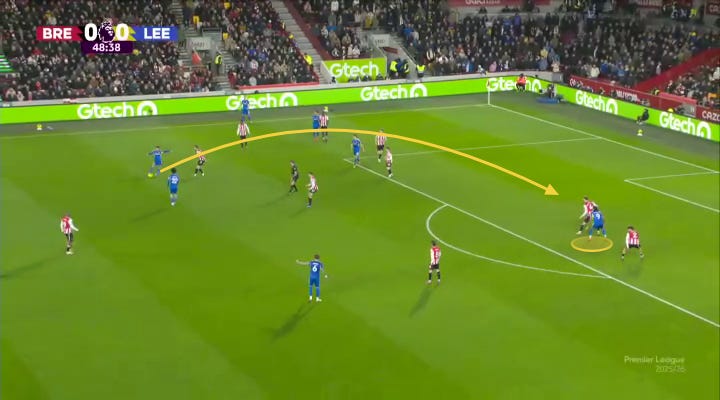
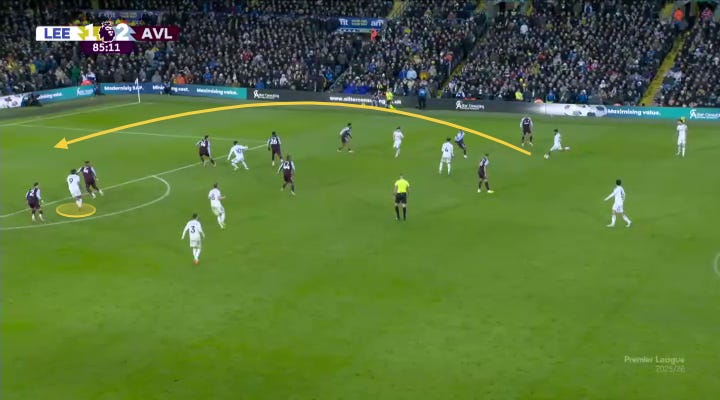
With these long passes, Leeds are taking advantage of the increased ability to play diagonally from the half space.
Joaquín Panichelli & RC Strasbourg — Half space options in crossing moments
When RC Strasbourg have the ball in wide areas and looking to cross the ball, they will have players positioned in the nearby half space.
This provides the crosser an extra option in addition to putting in the cross and it is a “safety net” in case the cross doesn’t reach it’s destination and can be helped on and or redirected.
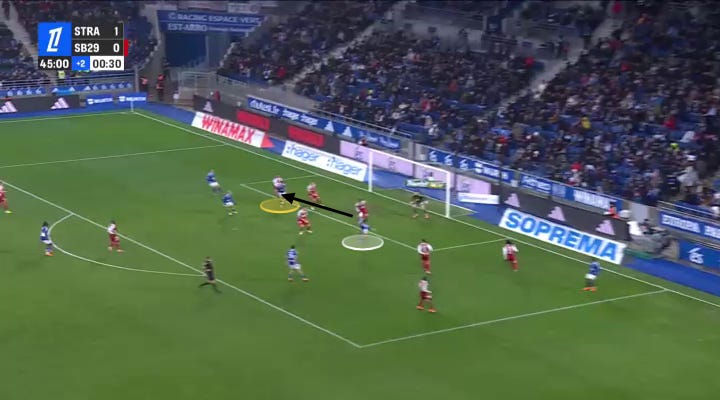
In the first example, the wide player put a last ditch cross into the box. The half space option is highlighted in white and Panichelli is highlighted in yellow.
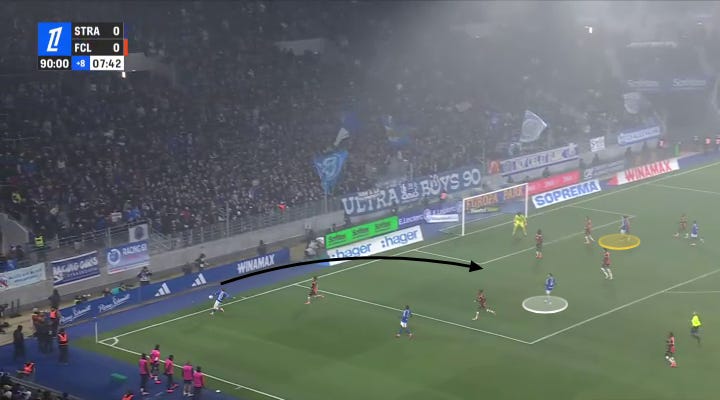
The cross was short, and the half space option was able to redirect the cross towards Panichelli who was able to get a head on the ball.
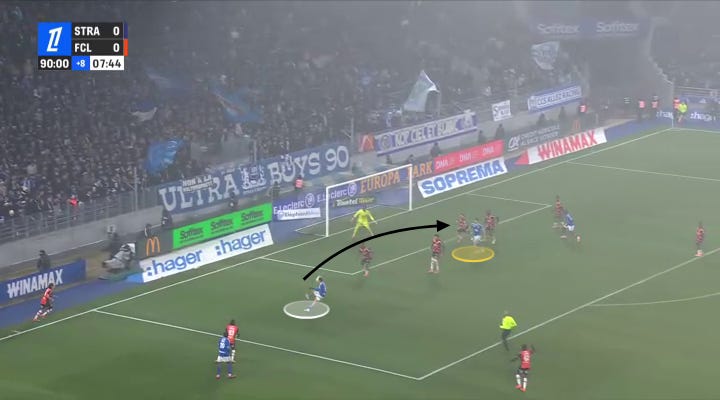
In the next example, a Strasbourg player was driving towards the end line in the box. There were two half space options highlighted in white and Panichelli was more central highlighted in yellow.
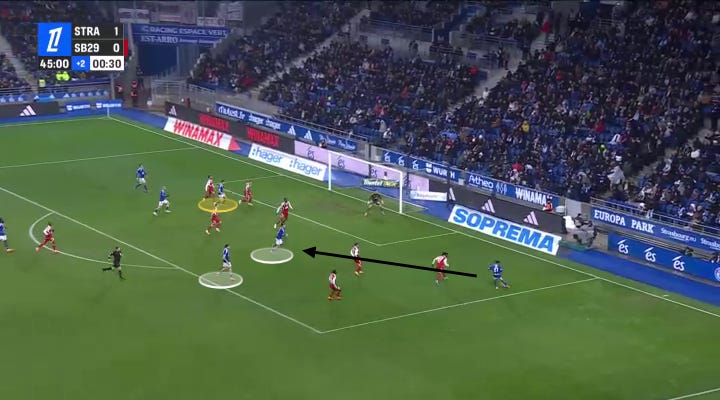
The cross was in the air, but the half space option was able to redirect the ball towards Panichelli who put a shot on target.
Earlier in the season against Brondby, Strasbourg had the ball in the wide channel. The half space option is highlighted in yellow, and Panichelli central in the box is highlighted in red.
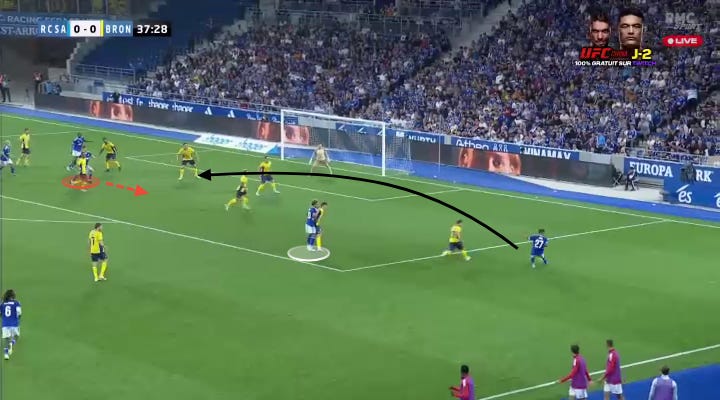
Panichelli got on the end of the cross and put his header on frame.
Strasbourg didn’t use the half space option here, but it is interesting that Brondby actively screened that option to take it away.
Hamza Igamane & Lille — Dynamic runs in the half space
In the attacking half, Lille stretches the field which creates space in the half space to make runs and find teammates.
Against Red Star in the Europa League, Lille had the ball in the wide channel. The nearest Lille player made a run into the wide area, and Igamane (highlighted in yellow) made a forward run.
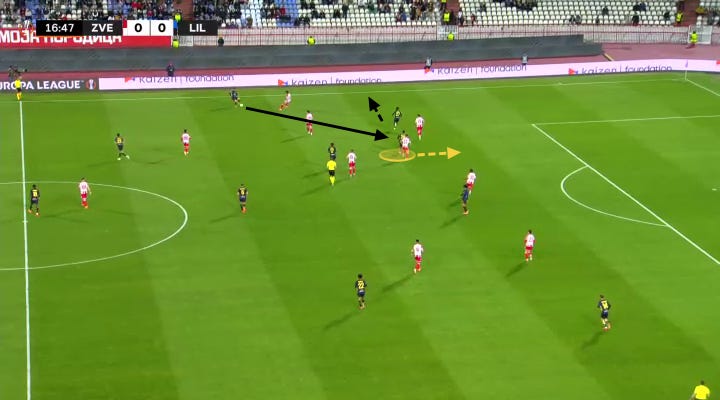
Igamane was able to get to the ball in the box and have a shot attempt.
In the next example, the ball side midfielder implemented a double movement and checked towards the ball and the opposite side midfielder made a diagonal run as the wide player was receiving a pass.
Igamane was positioned centrally highlighted in yellow.
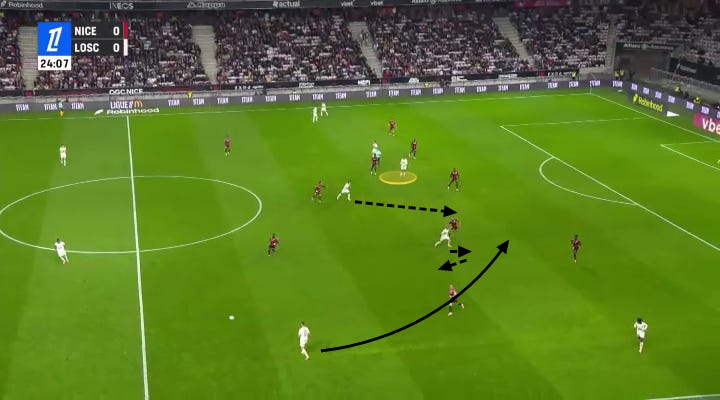
The midfielder who had made the diagonal forward run was able to get a touch and put the ball in the path of ball side midfielder. Igamane continued to position himself centrally.
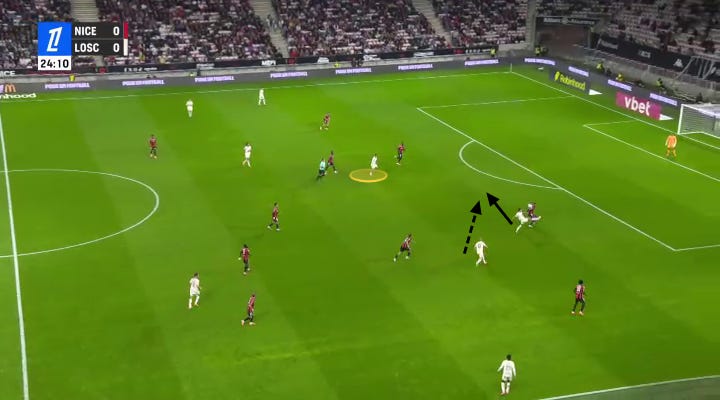
After getting on the ball, the midfielder drove towards the box, but he lost the ball in a tackle.
Igamane was able to pick up the ball as a second wave of attack due to his positioning, take a touch into the box and get a shot off.
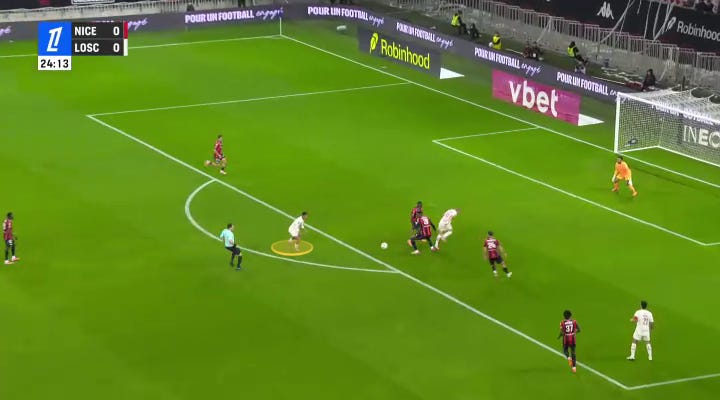
Photo: FM Santa Maria 94.5